
Keeping all of those new holiday toys organized
Gillian Economou, Sort It Out
Play is the work of childhood—and if you’re a mom navigating toys in a small home or shared living space, you know how quickly they can take over. The good news? Smart toy storage can help your child play independently and keep your home feeling calm.
Below are approachable, space-savvy ideas designed for busy moms and young kids.
1. Let Kids See What They Have
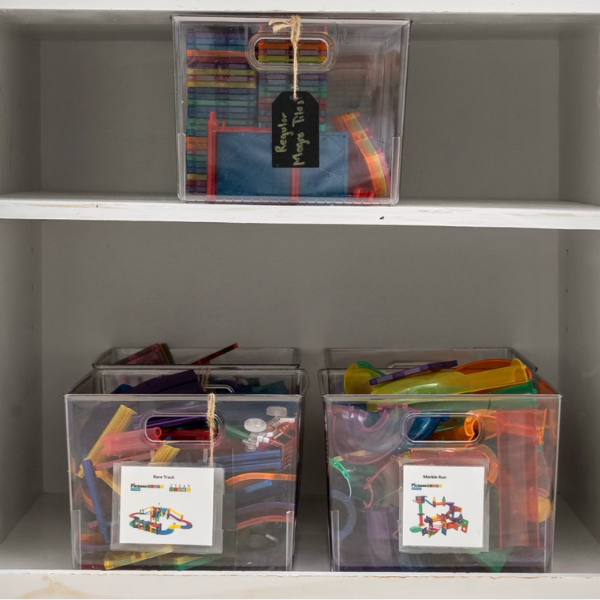
Toddlers and preschoolers are more likely to choose, play with, and put away toys they can see. Clear containers and low bins help your child feel confident playing on their own—which can also buy you a few extra minutes to breathe or move between activities.
Place clear bins on low shelves so kids can access their toys easily, and pair them with simple photos or picture cards so even non-readers know what goes where. This supports independent cleanup and builds confidence.
2. Use Every Inch of Storage—Especially in Small Homes
- Not everyone has a dedicated playroom—especially in the DC area. But closets, nooks, and even hallway space can become organized toy zones with a little intention:
- • Closet makeovers: Turn a spare closet into a mini toy closet by adding shelves
- or cubbies.
- • Living room drawers: Use furniture with built-in storage (like sideboards or
- media cabinets) to hide toys in plain sight.
- • Vertical space: Add narrow shelves or hooks for baskets to keep toys off the
- floor and maximize limited square footage.
- These simple adjustments make toy storage fit your home, not the other way around.
3. Choose Furniture That Works Double Duty
In small spaces, multifunctional furniture is your friend. Shelving with baskets, benches with hidden storage, and ottomans that double as toy bins keep toys close without sacrificing style.
When selecting pieces, look for ones that:
• Have storage your child can reach
• Blend with your décor so the space still feels calm
• Encourage your child to put toys away independently
This balance supports both play and order.
4. Make Cleanup a Game
Toddlers love structure, and cleanup can feel almost like part of playtime when it’s framed the right way. Try these ideas to make tidying up more fun:
• Color-coded bins: Assign colors to toy types (blocks, cars, animals) so kids can match and stash quickly.
• Photo labels: Snap a photo of the toys and tape it to the bin so kids know exactly what belongs where.
• “Beat the timer”: Set a two-minute cleanup sprint before snack time or heading out the door.
These small moments turn a chore into a challenge—and kids often rise to the task.
5. Rotate Toys to Keep Interest (and Reduce Clutter)
Instead of having all of your child’s toys out at once, keep a rotating selection available and store the rest. Toy rotation helps:
• Reduce sensory overload
• Make play feel fresh when toys reappear
• Cut down on daily cleanup time
You can rotate weekly or monthly depending on your schedule and your child’s interests. A simple basket under a bed or in a closet works well for toys that are “off rotation.”
6. Involve Little Helpers in Daily Routines
Storage systems only work when they’re supported by simple, consistent routines. Building habits that gently involve your child not only keeps clutter in check, but also helps kids feel capable and included. Try small, manageable moments like:
• Morning pickup (five toys before breakfast)
• A quick tidy before dinner
• End-of-day wind-down cleanup
This idea is echoed in Hunt, Gather, Parent, which explores how involving children in everyday activities helps them feel capable and connected. When children participate in caring for their environment, they naturally build responsibility, confidence, and cooperation. These mini check-ins prevent clutter from piling up while reinforcing that everyone plays a role in caring for the home—a win for both parents and kids.
7. Keep Toys Minimal
Kids often play more creatively when they’re not overwhelmed by too many options. Consider borrowing toys from places like the Toy Nest in Falls Church, swapping toys with other FIT4MOM families, or using local Buy Nothing groups to circulate toys through your community.
Used toys are wonderful for both budgets and the environment—and they often last much longer than our kids’ attention spans.
Make Storage Work for Your Life (Not the Other Way Around)
Effective toy storage doesn’t require expensive solutions or perfect playrooms. With clear containers, smart furniture choices, intentional routines, and a little rotation, you can create playful spaces that stay orderly—even in small homes.
For busy moms balancing workouts, errands, and toddler energy, these strategies help you stay organized while your child builds independence and confidence.
Here’s to joyful play and rooms that breathe.
Are you thinking: these are great tips, but I still don't have time?
No worries, Sort It Out Organizing can help!
Sort It Out is a local, mom-owned professional home organizing business serving families across the DMV. They have generous offered a 15% discount on hourly organizing services to FIT4MOM members.
About the Author
Gillian Economou is the owner of Sort It Out, a professional home organizing company serving families across Northern Virginia, Washington, DC, and Maryland. She has been featured in House Beautiful and Real Simple and is a mom of two elementary school–aged boys. Gillian is used to juggling many hats—including PTA president and small business owner—and brings practical, real-life systems to help busy families create calmer, more functional homes.
Learn more about Sort It Out HERE.