
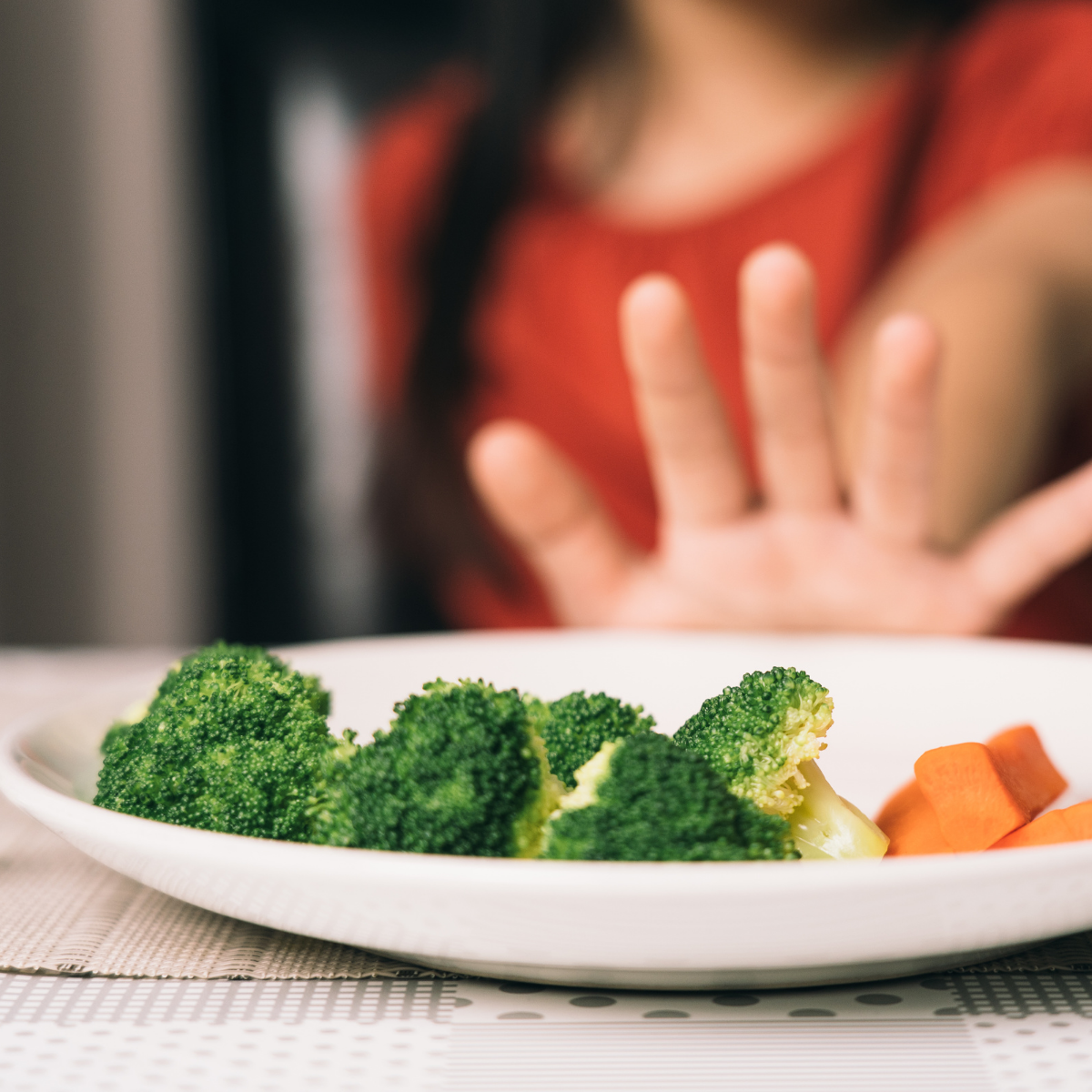
Your Kiddo’s Picky Eating Might Be in Their DNA
FIT4MOM DC x Motherly
Let’s be real: mealtimes can be rough. That moment when you bring a plate of vibrant veggies to the table and get greeted with a firm “no thank you” (at best) is familiar to so many of us. If you’ve ever felt like you’re doing everything right (offering a rainbow of foods, eating family meals, keeping it positive) and still end up with a menu of chicken nuggets, pasta, and fruit snacks, new research might be able to send you back to the table armed with new insights.
Could picky eating be genetic?
A study published in the Journal of Child Psychology and Psychiatry looked at eating behaviors in thousands of twins from toddlerhood through early teens. By comparing identical twins (who share all their genes) with fraternal twins (who share about half), researchers found that genetics explained a majority of the differences in picky eating. In fact, genetic factors accounted for most of the variation in food fussiness from around 16 months through age 13. What that tells us? Your child’s DNA plays a big role in why they might turn up their nose at certain textures, flavors, or foods even when your intentions (and Pinterest boards) are chef-level.
That doesn’t mean environment doesn’t matter at all. Researchers found that shared experiences, like family meals and the foods kids are regularly exposed to still influenced eating habits in the early years, especially around toddlerhood. So while genetics set the baseline, those everyday mealtime moments still count.
Here’s the takeaway for moms navigating picky eating:
You’re not failing. This research helps take the blame off parents and highlights how natural and common picky eating is. Motherly
-
Keep offering variety without pressure. Even if your child refuses peas five times, six times, or ten times, repeated gentle exposure to new foods still supports long-term healthy habits. Motherly
-
Normalize the struggle (and the wins). Most kids go through phases with food — and for many, picky eating does ease up over time as they grow. Motherly
If picky eaters are part of your story, you’re not alone — and this research reminds us that not everything is within our control. You're doing great!